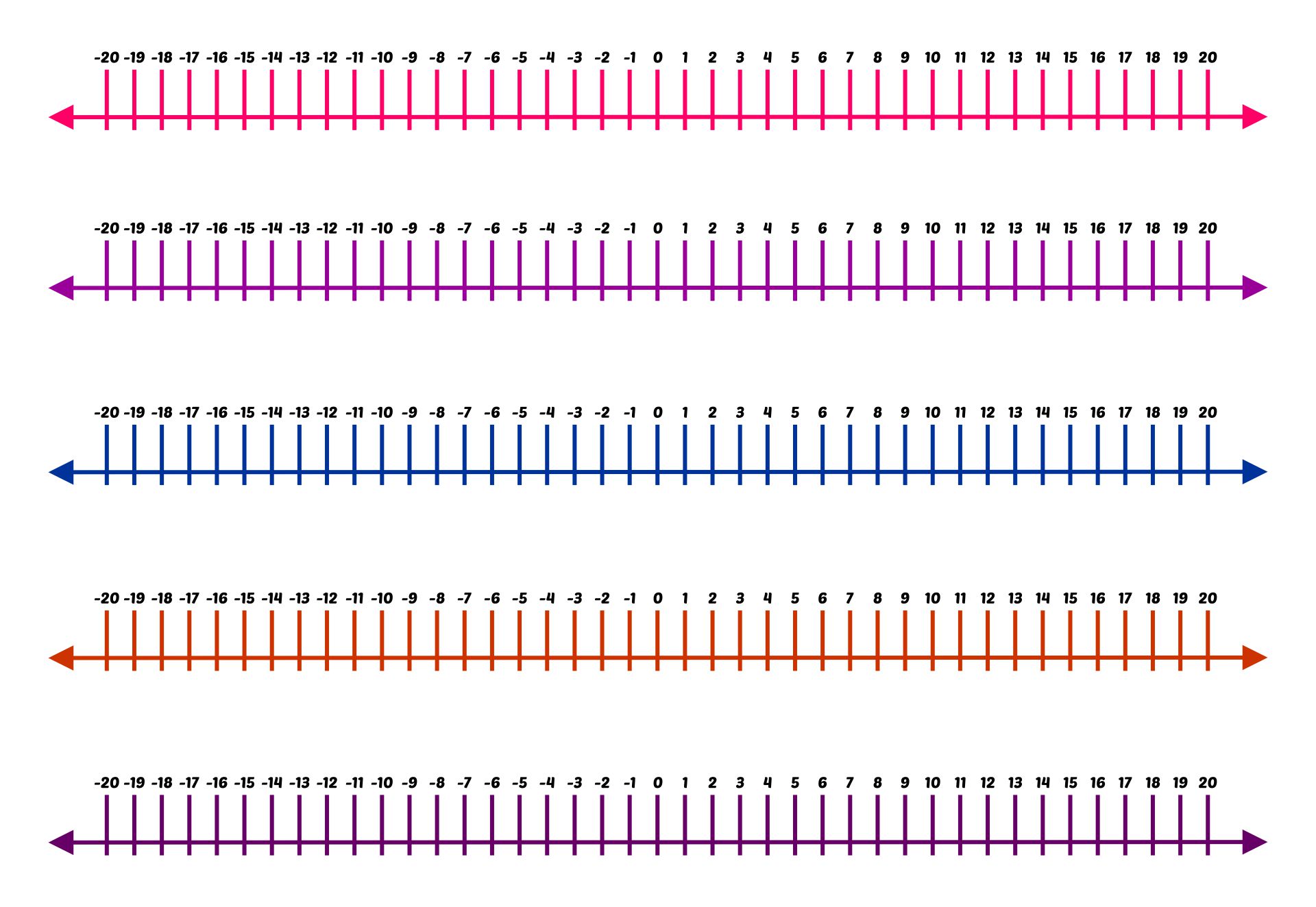
Understanding the Number Line: Negative and Positive Numbers to 20


Introduction to the Number Line
The number line is a fundamental concept in mathematics that helps us visualize and understand numbers and their relationships. It's a straight line with numbers marked on it, extending infinitely in both directions. The number line is divided into two main parts: the positive side and the negative side. In this article, we'll focus on the number line from -20 to 20, covering both negative and positive numbers.
The number line is a powerful tool for learning basic math concepts, such as addition, subtraction, multiplication, and division. By using the number line, students can see how numbers relate to each other and develop a deeper understanding of math operations. For example, when adding two numbers, you can move to the right on the number line, while subtracting means moving to the left.
Navigating Negative and Positive Numbers
When working with negative and positive numbers, it's essential to understand the concept of zero. Zero is the middle point of the number line, separating the positive and negative sides. Positive numbers are to the right of zero, while negative numbers are to the left. For instance, the number 5 is 5 units to the right of zero, while -5 is 5 units to the left. This understanding helps when performing calculations involving negative and positive numbers.
To navigate the number line from -20 to 20, start at zero and move to the right for positive numbers or to the left for negative numbers. Counting up, the positive numbers increase: 1, 2, 3, and so on, up to 20. Counting down, the negative numbers decrease: -1, -2, -3, and so on, down to -20. By practicing moving along the number line, you'll become more comfortable with negative and positive numbers and improve your overall math skills.