
Multiplying Mixed Numbers and Whole Numbers: A Step-by-Step Guide


Understanding Mixed Numbers and Whole Numbers
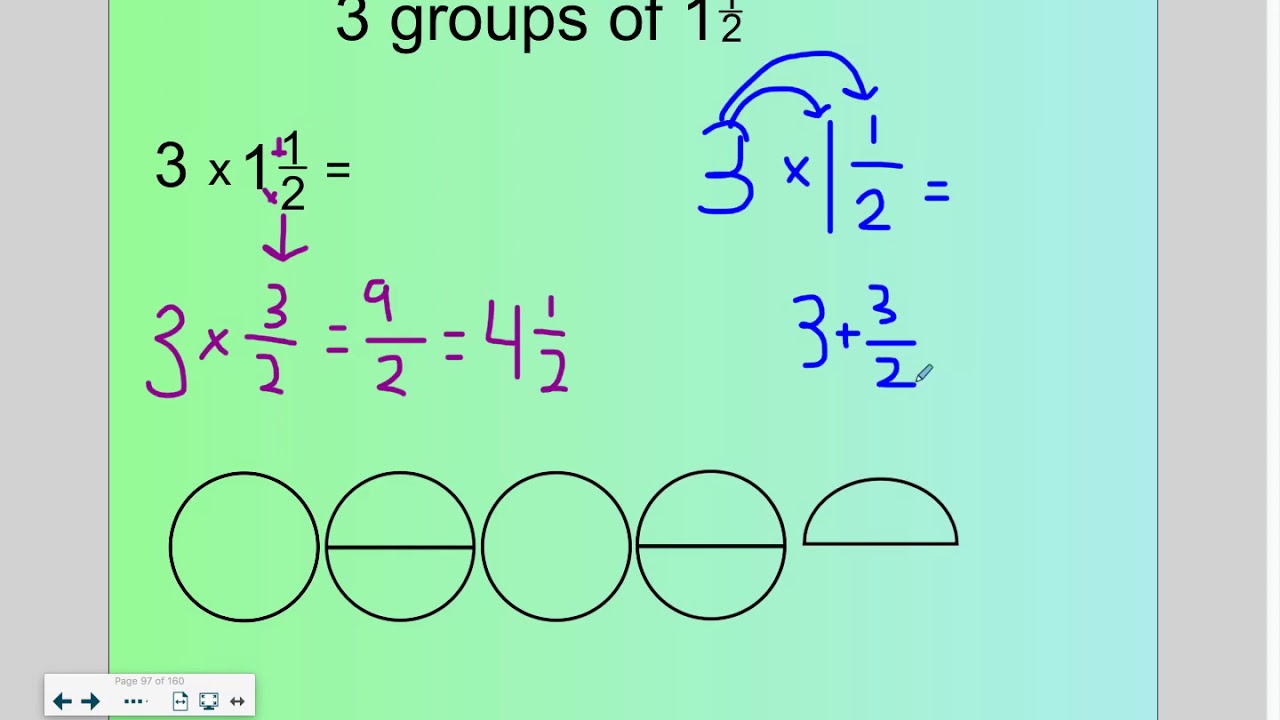
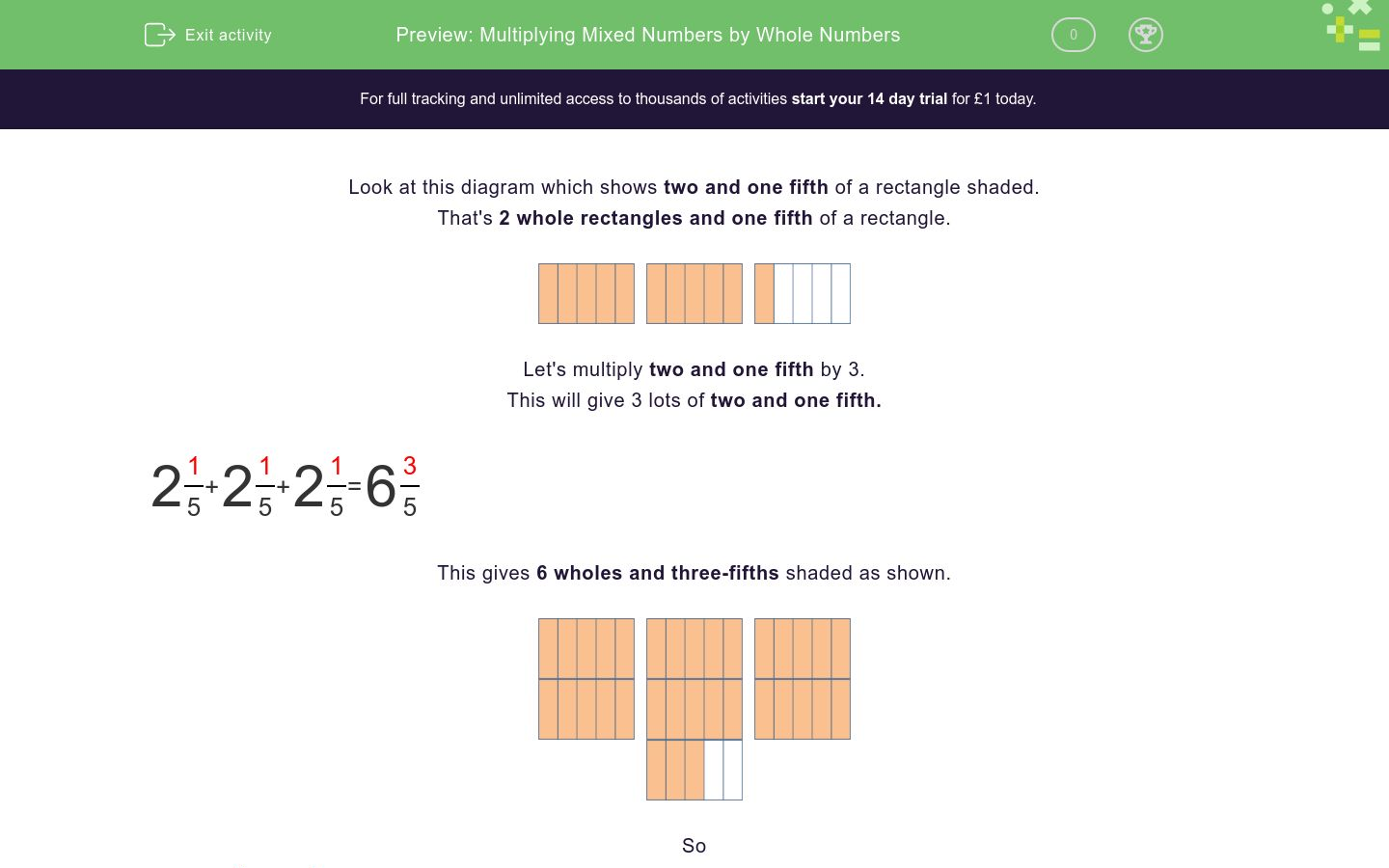
Multiplying mixed numbers and whole numbers is a fundamental concept in mathematics that can seem daunting at first, but with practice and patience, it can become second nature. Mixed numbers are a combination of a whole number and a fraction, while whole numbers are integers without any fractional parts. To multiply these two types of numbers, we need to follow a series of steps that involve converting the mixed number to an improper fraction, multiplying, and then simplifying the result.
The first step in multiplying mixed numbers and whole numbers is to convert the mixed number to an improper fraction. This can be done by multiplying the denominator by the whole number and then adding the numerator. For example, the mixed number 2 1/3 can be converted to an improper fraction by multiplying 3 (the denominator) by 2 (the whole number) and then adding 1 (the numerator), resulting in 7/3.
Multiplication Steps and Examples
To multiply a mixed number by a whole number, we need to multiply the numerator and denominator of the improper fraction by the whole number. For instance, if we want to multiply 2 1/3 by 4, we would first convert 2 1/3 to an improper fraction (7/3), and then multiply 7/3 by 4, resulting in 28/3. This can be simplified to 9 1/3. It's essential to remember that when multiplying fractions, we multiply the numerators and denominators separately.
With practice, multiplying mixed numbers and whole numbers becomes easier and more intuitive. It's crucial to remember the steps involved in the process, including converting the mixed number to an improper fraction, multiplying, and simplifying the result. By following these steps and practicing with different examples, you'll become proficient in multiplying mixed numbers and whole numbers, making it easier to tackle more complex mathematical problems.