
Multiplying A Whole Number By A Fraction: A Simple Guide



Understanding the Concept
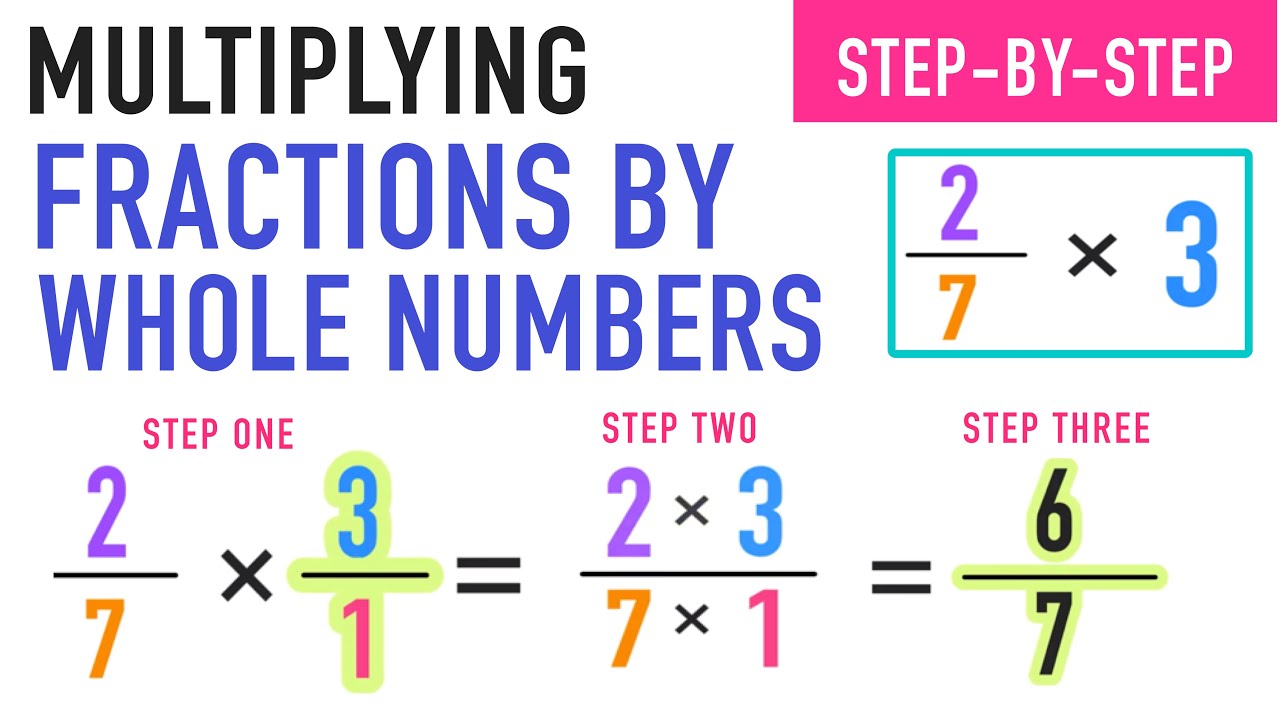
Multiplying a whole number by a fraction is a fundamental concept in mathematics that can seem intimidating at first, but with practice and patience, it can become second nature. The process involves multiplying the whole number by the numerator of the fraction and then dividing by the denominator. This operation is essential in various real-life scenarios, such as cooking, where you might need to scale up or down a recipe, or in construction, where precise measurements are crucial.
To multiply a whole number by a fraction, you start by multiplying the whole number by the numerator (the top number) of the fraction. Then, you divide the result by the denominator (the bottom number) of the fraction. For example, if you want to multiply 3 by 1/2, you would first multiply 3 by 1, which equals 3, and then divide by 2, resulting in 1.5. This process can be simplified as 3 * 1/2 = 3/2 = 1.5.
Practicing with Examples
The key to mastering the multiplication of a whole number by a fraction is understanding the relationship between whole numbers and fractions. A fraction represents a part of a whole, and when you multiply a whole number by a fraction, you are essentially finding a part of that whole number. For instance, multiplying 4 by 3/4 gives you 3, because 3/4 of 4 is 3. This concept is vital in solving problems that involve proportions and percentages.
Practice is essential to becoming proficient in multiplying whole numbers by fractions. Start with simple examples, such as multiplying 2 by 1/3, and gradually move on to more complex problems. With each example, pay close attention to the steps involved: multiplying by the numerator and then dividing by the denominator. As you practice, you will become more comfortable with the process, and it will become easier to apply this skill to real-world problems. Remember, the goal is to understand the concept thoroughly, so don't hesitate to seek help if you need it.