
Mastering Square Roots: A Guide to Adding and Subtracting Square Roots Worksheet


Understanding Square Roots
Adding and subtracting square roots can seem like a daunting task, but with practice and patience, it can become second nature. A square root is a mathematical operation that finds the number that, when multiplied by itself, gives a specified value. For example, the square root of 16 is 4, because 4 multiplied by 4 equals 16. Mastering square roots is essential for various mathematical operations, including algebra, geometry, and calculus.
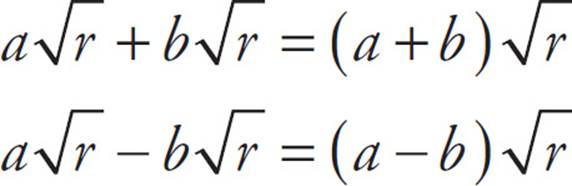
To add and subtract square roots, you need to follow certain rules. First, you need to simplify each square root by finding the largest perfect square that divides the number. Then, you can add or subtract the square roots, as long as they have the same radicand (the number inside the square root). For instance, you can add 2√5 and 3√5, because they have the same radicand, resulting in 5√5.
Practicing with Worksheets
Understanding the concept of square roots is crucial before diving into adding and subtracting them. It's essential to know how to simplify square roots, identify perfect squares, and recognize the properties of square roots. With a solid grasp of these concepts, you'll be better equipped to tackle more complex problems, including adding and subtracting square roots. You can find numerous online resources, including videos, tutorials, and practice worksheets, to help you understand square roots.
Practicing with worksheets is an excellent way to reinforce your understanding of adding and subtracting square roots. Our adding and subtracting square roots worksheet provides a comprehensive set of problems to help you master this skill. The worksheet includes a variety of problems, ranging from simple to complex, to cater to different learning levels. By working through these problems, you'll become more confident in your ability to add and subtract square roots, and you'll be better prepared to tackle more challenging math problems.